Listen to this blog ...
In high-volume OEM logistics networks, a security seal is not a packaging accessory. It is a control point within the asset integrity system.
For pharmaceutical, chemical, automotive and industrial OEMs, selecting a plastic security seals manufacturer is a risk-management decision. When a seal fails, the impact extends beyond product value. It affects chain of custody validation, insurance claims, regulatory exposure and brand credibility.
In structured supply chains, tamper-evident sealing solutions function as verification devices. Their reliability must be engineered, not assumed.
The Asset Integrity Function of Security Seals
Security seals serve three core purposes in industrial sealing applications:
- Chain of Custody Control – Providing visual evidence of tampering
- Traceability Support – Linking shipment identity to serialised records
- Regulatory Protection – Supporting documentation during audits
When these functions weaken due to inconsistent manufacturing, duplicate numbering or uncontrolled material quality, the entire supply chain absorbs the risk.
OEM supply requirements therefore, demand manufacturing consistency at scale.
OEM Manufacturing Expertise Across Regulated and High-Performance Industries
As a long-standing OEM-focused engineered components manufacturer, Novoflex has delivered engineered plastic components for over four decades with a consistent focus on process discipline, quality governance and supply continuity. In addition to security seals, the broader engineered fastening portfolio includes cable ties, nylon tie wraps and precision-moulded fastening components supporting structured OEM supply programs.
Operating from India, Novoflex supports regulated OEM programs across domestic and export-oriented pharmaceutical, chemical and broader regulated industrial supply chains.
Quality governance includes RoHS compliance, IATF-aligned systems where applicable, D-U-N-S registration and product testing references, including TUV validation where required.
Novoflex also operates within the approved vendor ecosystems of leading OEM brands such as Maruti Suzuki, Kia, Tata Motors, JCB, Escorts Kubota Limited, among other industrial applications.
Why does partnering with an ISO-compliant manufacturer matter?
In high-value supply chains, compliance is not about certification; it is about control. For OEMs managing regulatory scrutiny, cross-border logistics and multi-site operations, manufacturing discipline directly impacts risk exposure, audit outcomes and brand protection.
For security seals, this translates into:
- Controlled production workflows
- Documented quality control and testing procedures
- Batch-level traceability
- Defined corrective action protocols
This reduces variability across production runs and strengthens audit readiness. For OEM partners operating across multiple countries, standardisation ensures that security seals used in one region behave consistently in another. That consistency supports operational alignment and reduces revalidation efforts.
In regulated industries, this directly impacts tamper-evident sealing compliance and audit traceability requirements.
Operational Risk Factors in Non-Standardised Security Seals
Most security seal vulnerabilities do not present as visible defects. They emerge as performance inconsistencies across batches, environments and handling conditions.
Common risk patterns include:
- Resin inconsistency leading to brittle break-strength in cold storage
- Duplicate serial numbers are disrupting warehouse management systems
- Fading thermal prints weaken tamper evidence
- Lock chamber deformation under transport stress
At scale, even a 0.5% deviation multiplies into operational friction.
For OEMs, the concern is not whether a seal locks. The concern is whether its break-strength and tamper evidence remain predictable across millions of units.
Engineering Validation Standards That Govern Seal Performance
High-reliability security seals are validated through measurable parameters, including:
- Tensile strength consistency
- Break-force range control
- Material grade verification
- Dimensional stability under load
- Visual tamper evidence integrity
Similar validation protocols are applied across engineered fastening components, such as cable zip tie mounts and plastic cable clamps used in regulated industrial environments.
Batch-level traceability allows a seal to be linked back to its raw material lot and production shift.
This structured documentation reduces liability exposure and supports investigation efficiency if a logistics event occurs.
Serial Governance and Chain-of-Custody Integrity of Security Seals
Protecting shipment identity through structured sequential numbering requires that a disciplined tamper-evident sealing manufacturer ensure:
- Non-duplicate serialisation logic
- Controlled marking processes
- Durable marking technology
- Record retention for audit trails
Laser marking and controlled hot stamping improve long-term visibility and reduce tampering ambiguity.
When serial integrity collapses, chain of custody validation becomes difficult.
Manufacturing Discipline Behind Our Security Sealing Systems
Since 1980, with over four decades of engineering and production experience, Novoflex has operated under ISO 9001:2015 and ZED Gold certification frameworks.
Within the structured industrial sealing range, application-aligned systems include courier bag seals, fire drum seals and Kwik Lok security seals. These illustrate application diversity within structured OEM programs without limiting the broader engineered sealing portfolio.
Courier-bag seals are manufactured from Nylon 6.6 material, with products tested by UL.
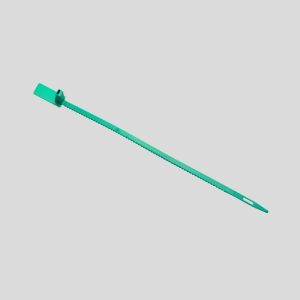
Nylon 6.6 Courier Bag Security Seal
Applied in:
Bulk Drugs, Refineries, Chemical Industries, Pharmaceutical Industries and across diverse regulated environments.
Fire Drum Seals are manufactured from Nylon 6 – Polyamide material, with products tested by UL
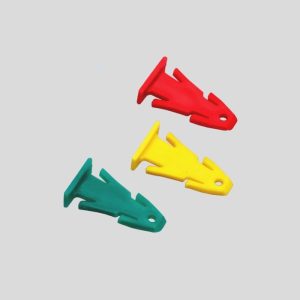
Fire Drum Seals
Applied in:
Automobiles, Railways, Aviation, Couriers and Logistics, Ship Building, Power Plants, Chemicals and Dyes, across additional regulated sectors.
Kwik Lok Security Seals (Manufactured from Nylon 6.6 material, with products tested by UL) are often preferred over conventional locking zip ties in high-security logistics environments.
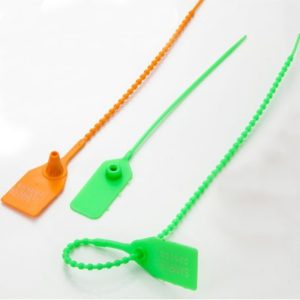
Kwik Lok Nylon 6.6 Security Seal
Applied in:
Truck Sealing, Fiber Drums, Zippered Money Bag, Information Tag, Emergency Doors and across diverse regulated environments.
As part of a broader engineered sealing portfolio of industrial sealing, these products reflect our commitment to manufacturing quality standards at scale. Novoflex has a range of 1500+ products and structured quality control systems aligned with defined industrial standards.
Explore the full security seals catalogue aligned with our documented quality systems
Novoflex’s Manufacturing Control Architecture for Security Seals
For OEM security seal programs, manufacturing discipline must extend beyond certification and into operational execution. Novoflex structures its security seal production around defined control systems that prioritise traceability, validation and supply continuity.
For OEM security seal programs, Novoflex supports:
- Controlled batch traceability
- Structured quality control and testing
- Stable serialised numbering systems
- Application-specific tamper-evident sealing solutions
- Bulk production capability aligned with OEM supply requirements
For bulk quantities, Novoflex also supports:
- Custom branding
- Sequential numbering
- Laser marking
- Custom colours (subject to volume thresholds)
Lead times vary by product category and location, with many regular products available ready for dispatch from the manufacturing facility within one week and certain custom programs operating within a 1–2 week window, depending on scope.
Novoflex’s Recognition for Manufacturing Governance and Process Discipline
Novoflex’s manufacturing discipline and engineering consistency have also been acknowledged. The company was featured by CEO Magazine as “Brand of the Year” in the Plastic Component Solutions category, highlighting its state-of-the-art engineered component capabilities and long-standing commitment to quality-driven production systems.

Novoflex Featured as Brand of the Year 2019 in Plastic Component Solutions
Differentiating Generic Suppliers vs. OEM-Qualified Manufacturers
Not all security seal suppliers operate under structured manufacturing discipline. The distinction between generic sourcing vendors and
OEM component suppliers (qualified manufacturers) becomes evident across material control, serial governance and supply continuity.
The comparison below outlines structural differences relevant to regulated industrial environments:
| Evaluation Area | Generic Supplier | OEM-qualified Manufacturer |
|---|---|---|
| Material Control | Mixed/unverified | Controlled grade material |
| Traceability | Limited | Batch-level documentation |
| Serial Integrity | Manual/duplication risk | Structured serialisation logic |
| Compliance Framework | Undefined | ISO-aligned systems |
| Change Control | Informal | Documented process control |
| Supply Planning | Reactive | Production continuity planning |
For regulated OEM programs, these structural controls directly influence audit defensibility and operational risk exposure.
Control, Compliance and Cost in Security Seal Selection
Security seals are low-cost components with high liability weight.
Reducing cost without validating manufacturing consistency may introduce:
- Audit friction
- Insurance disputes
- Shipment holds
- Revalidation costs
- Brand risk
Selecting a disciplined tamper-evident sealing partner protects asset integrity, strengthens chain-of-custody documentation and supports scalable industrial sealing applications.
Conclusion: Secure Your Chain of Custody with our Security Seals
In structured OEM supply chains, security seals function as controlled verification components within broader asset integrity systems.
Minor inconsistencies in material behaviour, serial governance or production discipline can introduce avoidable compliance friction across multi-site logistics networks.
Procurement and quality teams may evaluate tensile validation data, locking integrity parameters and traceability documentation before scaling OEM security seal programs.
Connect with the Novoflex technical team to discuss the long-term OEM Security seal.