Listen to this blog ...
Why Heat Cycling Matters?
Industrial equipment rarely operates at a constant temperature. Electrical panels heat up during operation and cool after shutdown, automotive systems warm while vehicles are running and outdoor installations experience daily temperature changes caused by weather conditions.
Automotive engine compartments, for example, may experience repeated thermal cycling throughout a vehicle’s service life as components heat up during operation and cool after the vehicle is switched off.
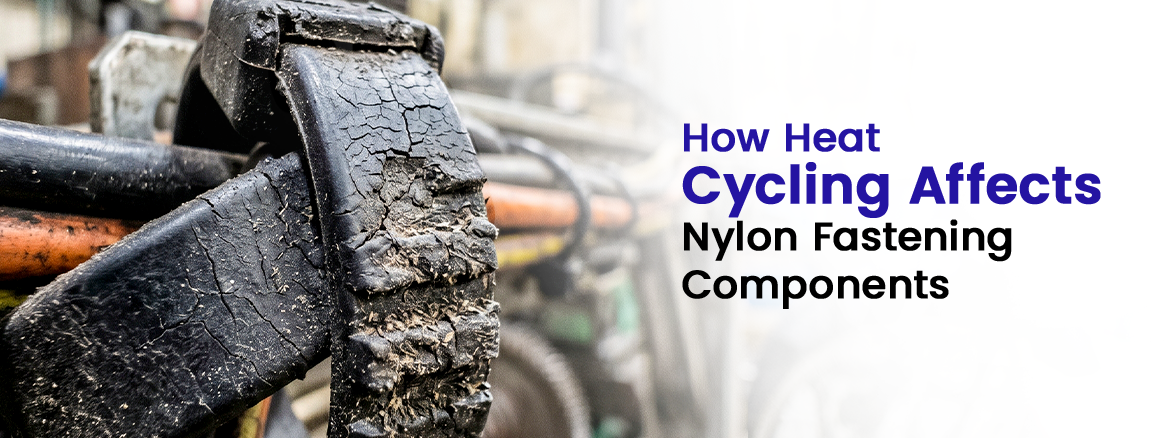
These repeated temperature changes, known as heat cycling, create a different operating environment from equipment that remains at a stable elevated temperature.
Consider an electrical control panel that operates between 30°C and 60°C during a working day, compared with another installation that remains at a constant 60°C. Although both reach similar temperatures, the operating conditions experienced by the fastening components are different.
For engineers and procurement teams, understanding this difference helps ensure components are selected according to their actual operating environment rather than a single specification on a datasheet. During product specification, engineers often evaluate not only the maximum operating temperature but also how frequently those temperatures change throughout normal service. This broader assessment helps match fastening components to real operating conditions instead of theoretical limits.
How Heat Cycling Influences Nylon Fastening Components?
Rather than asking whether a fastening component is simply “heat resistant”, engineers evaluate whether it is appropriate for the complete operating environment throughout the life of the installation. Heat-resistant nylon cable ties may be considered for applications exposed to elevated or fluctuating temperatures, but the appropriate material should be selected according to the actual operating conditions rather than temperature alone.
Selecting the Right Nylon Material
Different nylon formulations are designed for different operating environments. Choosing the appropriate material helps ensure the fastening component matches the application’s thermal and environmental requirements. For applications requiring higher thermal performance, high-temperature cable ties can provide a suitable fastening option when their operating range matches the application’s requirements.
Engineering Tip
Standard Nylon 6.6 may provide the required performance in many electrical panels, telecommunications cabinets and general industrial applications, depending on the operating conditions. Heat-Stabilised Nylon 6.6 and Nylon 4.6 should be specified only when the operating environment demands higher thermal performance. Matching the material to the application helps optimise engineering performance while avoiding unnecessary procurement costs.
Temperature should also be evaluated alongside other environmental factors, including UV exposure, moisture, vibration, cable loading and expected maintenance requirements. Looking at the complete operating environment provides a more reliable basis for component selection than relying on a single specification.
Procurement Considerations Beyond Temperature Ratings
Selecting nylon fastening components involves more than matching an operating temperature.
Procurement teams should also consider material consistency, dimensional accuracy, repeat-order availability and application-specific product guidance when evaluating cable tie suppliers or manufacturers.
Important considerations include:
- Consistent raw materials across production batches.
- Reliable dimensional accuracy.
- Product selection guidance
- Long-term availability for repeat procurement.
- Lifecycle value rather than purchase price alone.
These factors help standardise installations, simplify maintenance and reduce variation across future projects.
Procurement Tip
In addition to selecting the appropriate material, procurement teams should consider how fastening components are stored before installation. Novoflex recommends storing its cable ties in a cool, dark, dry place away from sunlight and in sealed condition.
Why Manufacturing Consistency Matters?
Selecting the appropriate material is only part of the equation. Even a well-specified fastening component depends on consistent manufacturing quality to deliver reliable performance across multiple production batches.
Consistent manufacturing helps maintain:
- Material quality.
- Dimensional accuracy.
- Repeatable production standards.
- Product consistency across repeat orders.
- Greater confidence during specification and installation.
This becomes particularly important for organisations managing large industrial projects where components are procured over many years and specification consistency is essential.
Since 1980, Novoflex has been a cable ties manufacturer producing engineered plastic fastening and cable management components for industrial applications. Its portfolio includes Standard Nylon 6.6, Heat-Stabilised Nylon 6.6 and Nylon 4.6 fastening solutions, supported by an ISO 9001:2015 certified quality management system. By combining engineering expertise with consistent manufacturing practices, Novoflex helps customers specify fastening components that match different operating environments while maintaining reliable quality across repeat procurement.
Selection Checklist for Engineers and Procurement Teams
Before specifying nylon fastening components for applications exposed to heat cycling, review the operating environment as carefully as the product specifications.
Consider the following:
- Does the application experience regular heating and cooling cycles?
- What is the expected operating temperature range?
- Will the installation be exposed to UV radiation, moisture or chemicals?
- Is vibration or cable movement likely during operation?
- Which nylon material best matches the application’s operating conditions?
- Can the supplier maintain consistent product specifications across repeat orders?
- Does the manufacturer provide product selection guidance?
- Are products stored and handled according to the manufacturer’s recommendations before installation?
Considering these factors early in the design or procurement process helps reduce specification changes, improves maintenance planning and supports consistent long-term performance.
Conclusion
Heat cycling is a common operating condition across industrial, automotive, electrical and infrastructure applications. While maximum operating temperature remains an important specification, it should not be the only factor influencing the selection of nylon fastening components.
Engineers increasingly evaluate the complete operating environment, including temperature fluctuations, UV exposure, vibration, moisture, cable loading and expected service life, to ensure components are appropriate for their intended application. This broader approach helps improve installation reliability, maintenance efficiency and long-term operational performance.
For procurement teams, selecting the right material also means choosing a manufacturing partner capable of delivering consistent quality, repeatable product specifications and reliable product selection guidance across future projects.
Looking for the right nylon cable ties or fastening solution for your application? Novoflex manufactures a wide range of Standard Nylon 6.6, Heat-Stabilized Nylon 6.6 and specialty fastening products for industrial, automotive, electrical and infrastructure projects. Contact our engineering team for application guidance and product recommendations.