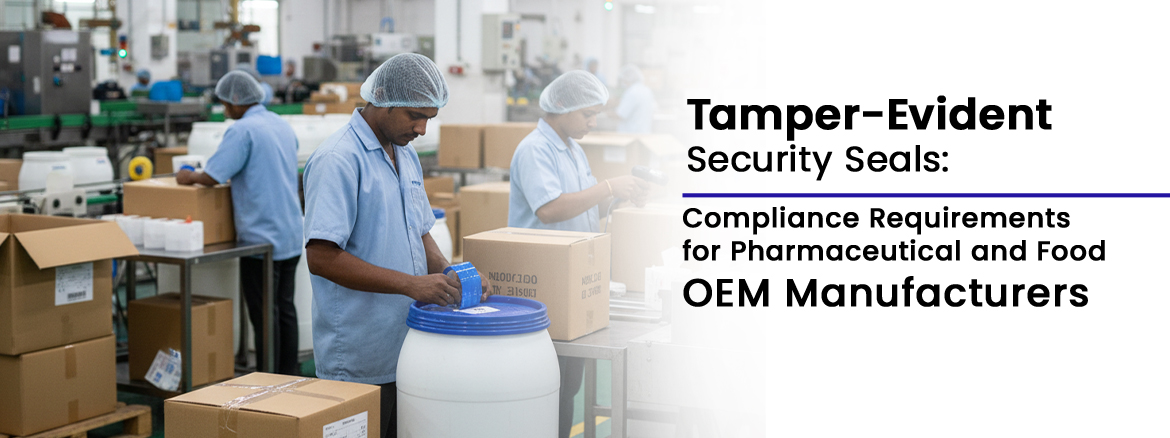
Listen to this blog ...
In regulated industries such as pharmaceuticals and food processing, the selection of a plastic security seals manufacturer is not a routine procurement decision. It is a compliance-driven evaluation directly linked to contamination control, audit defensibility and documented chain-of-custody validation.
For pharmaceutical and food OEM manufacturers operating under GMP and HACCP regulatory frameworks, tamper evidence is not optional. It forms part of structured supplier qualification processes, logistics validation protocols and export compliance requirements.
Security seals in these environments serve a defined and auditable purpose: to provide visible, verifiable evidence of unauthorised access during storage, transit or internal material movement across industrial sealing applications.
Why Tamper-Evident Security Seals Are a Regulatory Imperative in Pharmaceutical and Food OEM Supply Chains?
Pharmaceutical and food OEMs function under continuous regulatory oversight. From raw material dispatch to finished goods distribution, every transfer point must preserve product integrity and documentation traceability.
This is particularly relevant in bag-level sealing applications where sealing solutions such as pilfer-proof bag closure seals are used to secure contents during storage and transit.
Tamper-evident sealing solutions help address three measurable compliance risks:
- Unauthorised access during transit
- Contamination exposure in controlled facilities
- Breakdown in documented chain-of-custody records
During QA audits, serialised seal validation is often cross-verified against dispatch documentation. This becomes critical during export audits where seal verification is mapped against batch dispatch records. If a seal is mismatched, duplicated or compromised, shipments may be quarantined pending investigation.
For Quality Assurance heads and supply chain managers, the question is not whether a seal locks, it is whether the seal performs with batch stability across production cycles while supporting structured audit documentation.
What Pharmaceutical and Food OEMs Expect from a Plastic Security Seals Manufacturer?
A compliance-aligned tamper-evident sealing manufacturer must demonstrate alignment with defined OEM supply requirements and regulatory frameworks. Supplier evaluation typically includes:
1. Manufacturing Consistency
Validated break-strength ranges must remain stable across production batches, reflecting the importance of consistent manufacturing and quality control in long-term OEM programs.
2. Documented Quality Control Processes
Inspection checkpoints, raw material traceability and corrective action protocols must be structured and audit-accessible.
3. Serialised Traceability Architecture
Non-duplicate sequential numbering, controlled marking systems and retained production logs must support investigation efficiency.
4. Verified Material Usage
Use of controlled polymer compositions such as Nylon 6 or Nylon 6.6 improves dimensional stability in cold-chain logistics and high-humidity processing facilities.
5. Documentation Readiness
Alignment with ISO 9001:2015 quality management systems and RoHS compliance documentation supports structured vendor qualification processes.
These evaluation parameters are often assessed alongside broader supplier evaluation frameworks for security seals.
These requirements are typically evaluated across tamper-evident sealing solutions, including applications such as pilfer-proof bag closure seals used in regulated packaging environments.
Material Specifications Aligned with Regulated Environments
To meet pharmaceutical and food OEM compliance expectations, tamper-evident security seals must be manufactured from validated polymer compositions with predictable performance characteristics.
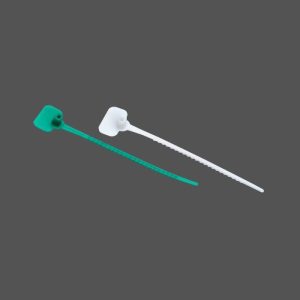
plastic security seals manufacturer
Material Composition:
Tamper-evident sealing solutions, including pilfer-proof bag closure seals, are manufactured from Nylon 6.6 material, with products tested by UL.
Flammability Classification:
UL94 V-2 (where applicable).
Nylon 6.6 offers dimensional stability, resistance to fungus, corrosion resistance and durability against most mild acids, supporting consistent performance behaviour in controlled production environments and export-oriented pharmaceutical supply chains.
Similar polymer compositions are widely used in nylon tie wraps and other engineered fastening components. However, tamper-evident sealing applications require additional validation related to serial integrity, break-force control and audit-traceable performance parameters.
These material properties contribute to stable production behaviour across bulk manufacturing cycles.
These material characteristics support consistent sealing behaviour under regulated storage and transport conditions.
Technical Parameters That Define Reliable Security Seals
In tamper-evident sealing applications, including pilfer-proof bag closure sealing use cases, performance validation extends beyond surface inspection.
Key performance indicators include:
- Controlled tensile and break-force range
- Lock chamber integrity under transport vibration
- Durable laser or hot-stamped serial marking
- Dimensional stability in high-humidity conditions
- Resistance to brittleness in cold storage environments
While standard locking zip ties are used in general packaging control, regulated pharmaceutical and food environments require tamper-evident security seals engineered with structured serialisation and audit-ready traceability systems.
Where contamination sensitivity is critical, metal-detectable variants may be deployed within broader engineered fastening components programs to support HACCP-driven contamination control strategies.
The objective is predictable tamper evidence supported by structured quality control processes, not mechanical strength alone.
Serialisation, Audit Trails and Chain-of-Custody Control
In regulated supply chains, serialised traceability directly impacts audit defensibility and insurance validation.
Effective tamper-evident sealing solutions incorporate:
- Sequential numbering logic
- Controlled laser marking processes
- Batch-linked production documentation
- Cross-verification against dispatch records
If serial integrity collapses due to duplication, fading or inconsistent marking, chain-of-custody validation becomes compromised.
For pharmaceutical exporters and high-volume food manufacturers, this level of traceability supports stable industrial sealing applications aligned with global compliance standards.
Novoflex’s Manufacturing Discipline and OEM Supply Continuity
Beyond product performance, procurement teams evaluate the structural capability of the manufacturer.
With over four decades of OEM manufacturing experience, Novoflex operates under ISO 9001:2015 quality management systems and holds ZED Gold certification at the company level. The company supports regulated OEM programs across India and export-oriented pharmaceutical and food supply chains through disciplined production systems and documented process validation.
As a long-standing engineered fastening components manufacturer, including programs supporting regulated and high-volume OEM supply chains, Novoflex applies structured quality governance across tamper-evident sealing systems.
These sealing solutions form part of a broader engineered tamper-evident portfolio designed to support multiple regulated industrial applications.
For pharmaceutical and food OEM manufacturers, this ecosystem provides:
- Stable production scalability
- Controlled batch traceability
- Custom branding and serialised programs
- Predictable lead times aligned with plant dispatch schedules
This integrated manufacturing discipline reduces sourcing volatility while supporting compliance continuity across regulated supply chains.
Conclusion: Audit-Ready Tamper-Evident Sealing for Regulated Industries
In pharmaceutical and food supply chains, security seals carry significant compliance weight relative to their size. Minor inconsistencies in serialisation, break-strength validation or material stability can result in shipment holds, audit escalations and documentation reviews.
Selecting a plastic security seals manufacturer aligned with structured compliance expectations supports documentation integrity, structured OEM supply requirements and risk mitigation across regulated logistics environments.
Beyond tamper-evident sealing systems, Novoflex also operates as a cable tie manufacturer offering controlled polymer variants, including metal-detectable options aligned with regulated pharmaceutical and food environments.
Procurement and quality teams evaluating regulated supply programs are encouraged to review tensile validation data, locking integrity specifications and structured traceability documentation prior to scale-up.
Connect with the Novoflex technical team to request detailed specifications, compliance documentation or serialised validation samples aligned with your audit requirements.